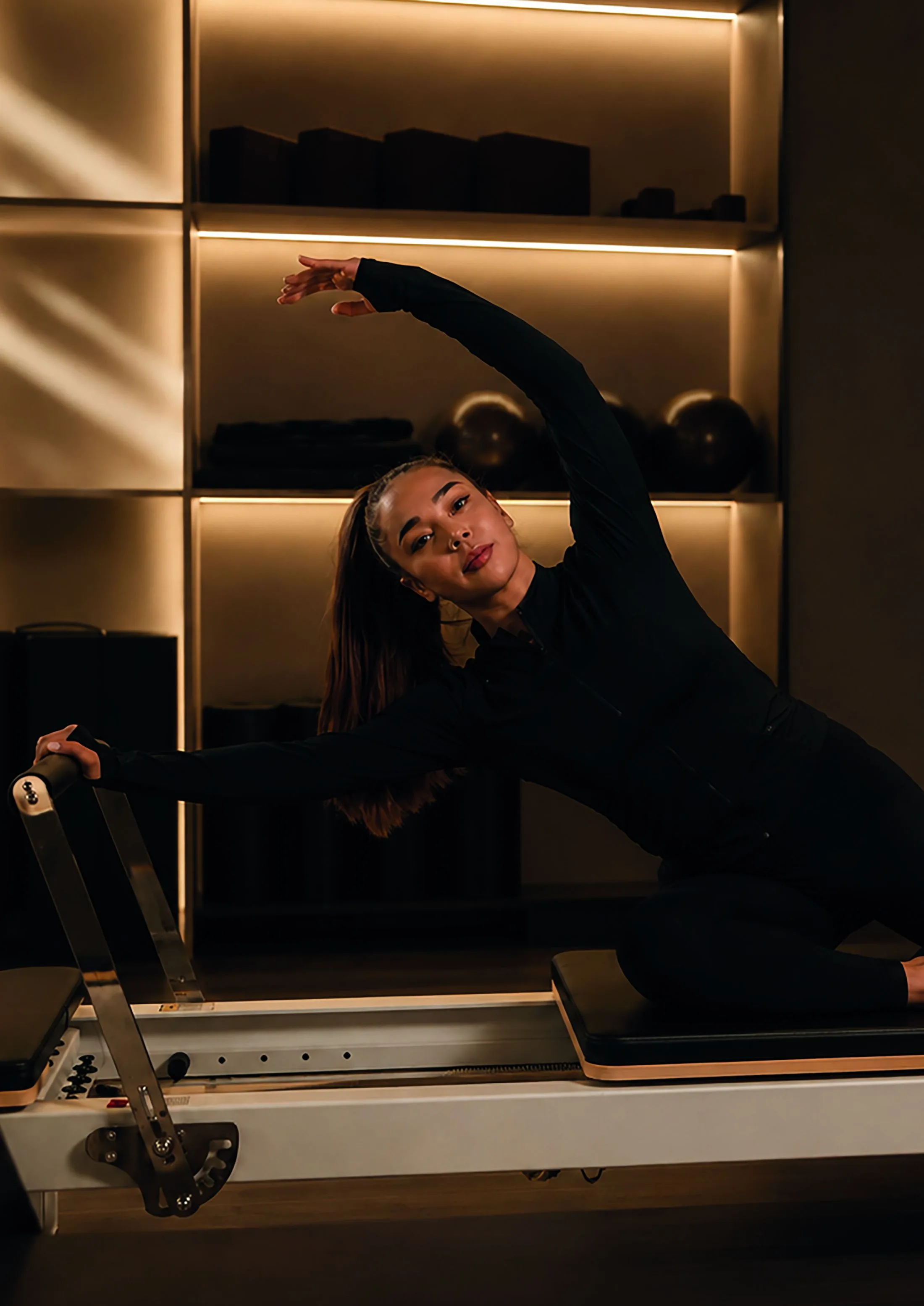
Pilates Reformer is Pilates performed on a specialised machine with a sliding carriage, springs and straps. It builds deep-muscle strength, posture, flexibility and control of movement, and the load can be adjusted precisely to any level of fitness. In Tashkent, reformer classes in mini-groups take place at Impress Fitness.
In short
- The reformer is a machine, not a separate “advanced” kind of workout: springs adjust the load, so it suits beginners and experienced trainees alike.
- What sets it apart from Pilates Mat is the resistance and support of the machine: it is easier to control technique and to work more precisely on individual muscles.
- No preparation is needed for a first session: comfortable clothes and a willingness to listen to your body are enough.
- Most people start with one or two sessions a week and increase the frequency as they feel ready.
What a reformer is
A reformer is a frame with a moving platform (the carriage) that slides back and forth. Springs of different tension are attached to it, along with straps and a footbar or hand supports. You do the exercises lying down, sitting, standing or kneeling, and the springs alternately assist the movement and resist it.
The Pilates method was developed by Joseph Pilates in the early twentieth century, and the apparatus became one of its main tools. Today the reformer is one of the most popular directions in women’s fitness around the world.
How the load works
Its defining feature is adjustability. The spring tension, body position and length of the carriage’s travel can all change. The same exercise can be made gentler or harder without changing its essence. That is why a woman who has just walked into a gym for the first time and one who has trained for years can use the same machine.
Reformer vs Mat
It is the same method with a different “tool”.
Pilates Mat is done on a mat. Here your own body weight provides the resistance. The format helps strengthen the core, improve joint mobility and learn conscious control of movement. It needs no complicated equipment, but it does call for attention to your own body.
Pilates Reformer follows the same principles, but with a machine. It adds resistance, supports the body in the right position and helps you feel exactly which muscles are working. It is the format for those who value precision of movement and fast adaptation.
Which to choose? Nothing stops you from trying both. Many people begin with Mat to learn the basics of breathing and working with the torso, then add the reformer. Others go straight to the reformer because the machine itself signals the correct body position.
Who Pilates Reformer suits
- those who want better posture and a stronger core;
- those who look for a gentle yet effective load;
- women who need recovery, including after childbirth: such classes are available at Impress Fitness, and in mini-groups the trainer’s attention belongs only to you;
- those with a desk job and a tired back;
- those who want to learn to feel their body and move with more confidence;
- those who train in other formats and want to complement them with precise work on technique.
If you have injuries, back or joint problems, are pregnant or have recently given birth, consult a doctor before starting and tell your trainer about your condition. The reformer is gentle, but it does not replace medical advice.
What to expect from a first session
The trainer decides exactly how a session goes, but the general picture is usually this.
- Introductions and questions. The trainer asks about your goals, how you feel, any injuries and your training experience.
- Setting up the machine. The position of the supports and the spring tension are chosen for your height and level.
- Basic principles. You are shown breathing, the position of the pelvis and spine, and how to engage the core. In Pilates the quality of a movement matters more than the number of repetitions.
- Exercises. They flow smoothly, without jerking. You should not feel pain: a pleasant muscular effort is normal, sharp pain is a reason to tell the trainer at once.
- Finishing. This usually includes gentle stretching and calm breathing.
What to bring: comfortable, close-fitting clothes in which your body position is visible and straps will not catch, and socks (some studios expect you to train in socks). Check this with the club in advance.
How often to train
There is no universal answer; it depends on your goals, how you feel and your schedule. In general terms:
- Once a week is a good start for learning the technique and seeing how your body responds.
- Two or three times a week is the frequency at which change in posture, core strength and the feeling of lightness in the body is most often noticed.
- What matters is regularity, not records. Two calm sessions a week over several months beat three weeks of daily effort followed by a pause.
Listen to your body: if you feel heavy fatigue or discomfort in your joints after a session, discuss the load with your trainer.
How to combine the reformer with other formats
The reformer complements other directions rather than competing with them.
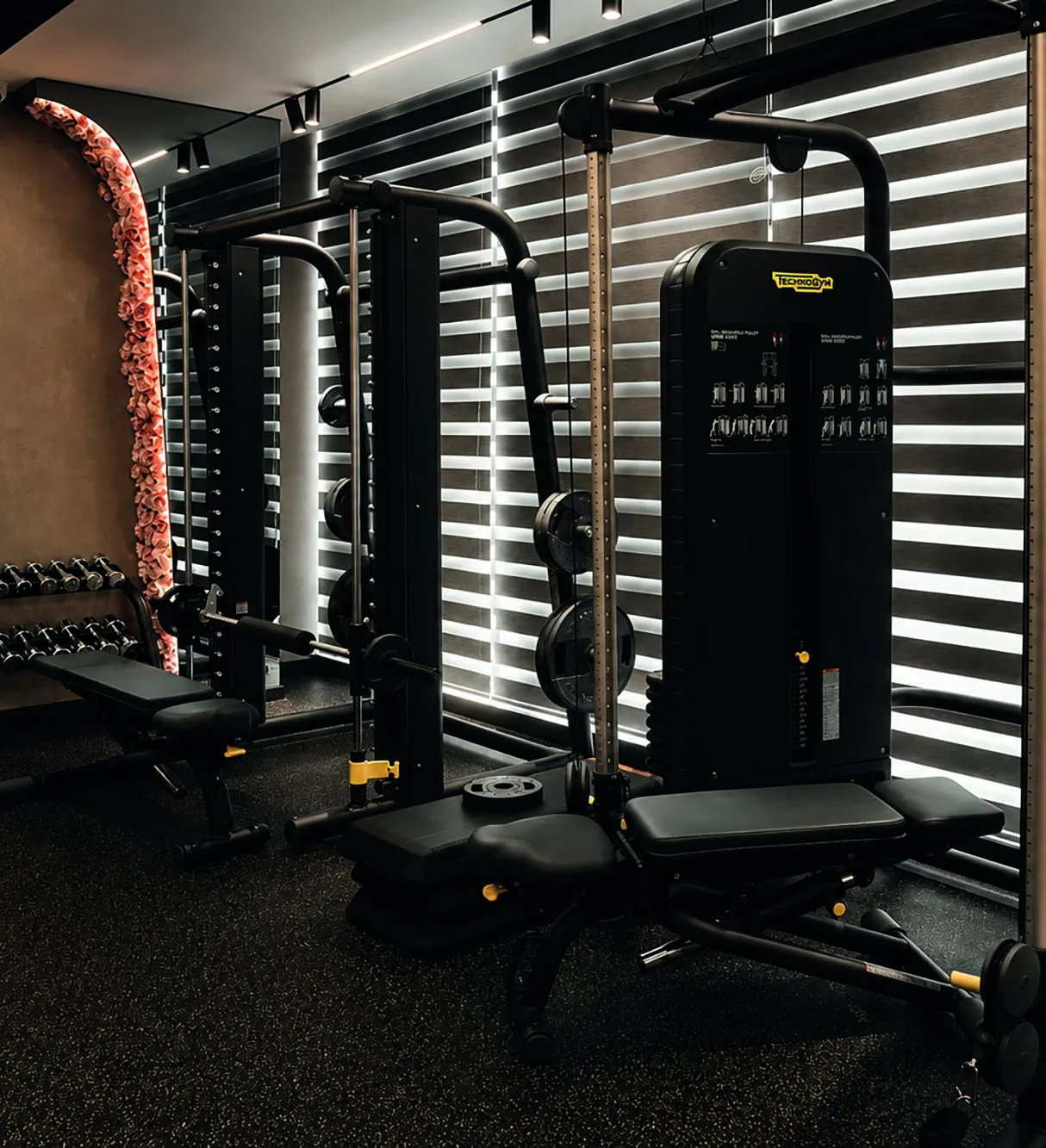
- With the gym. Strength training on Technogym equipment builds strength, while the reformer adds control, posture and mobility.
- With yoga and stretching. Hatha Yoga and Stretch Relax develop flexibility and relaxation; to decide between them, read how to choose between yoga and stretching.
- With Healthy Back. If your back is your main concern, it is worth discussing a combination of the two formats with your trainer.
- With Pilates Mat. The mat and the reformer develop each other.
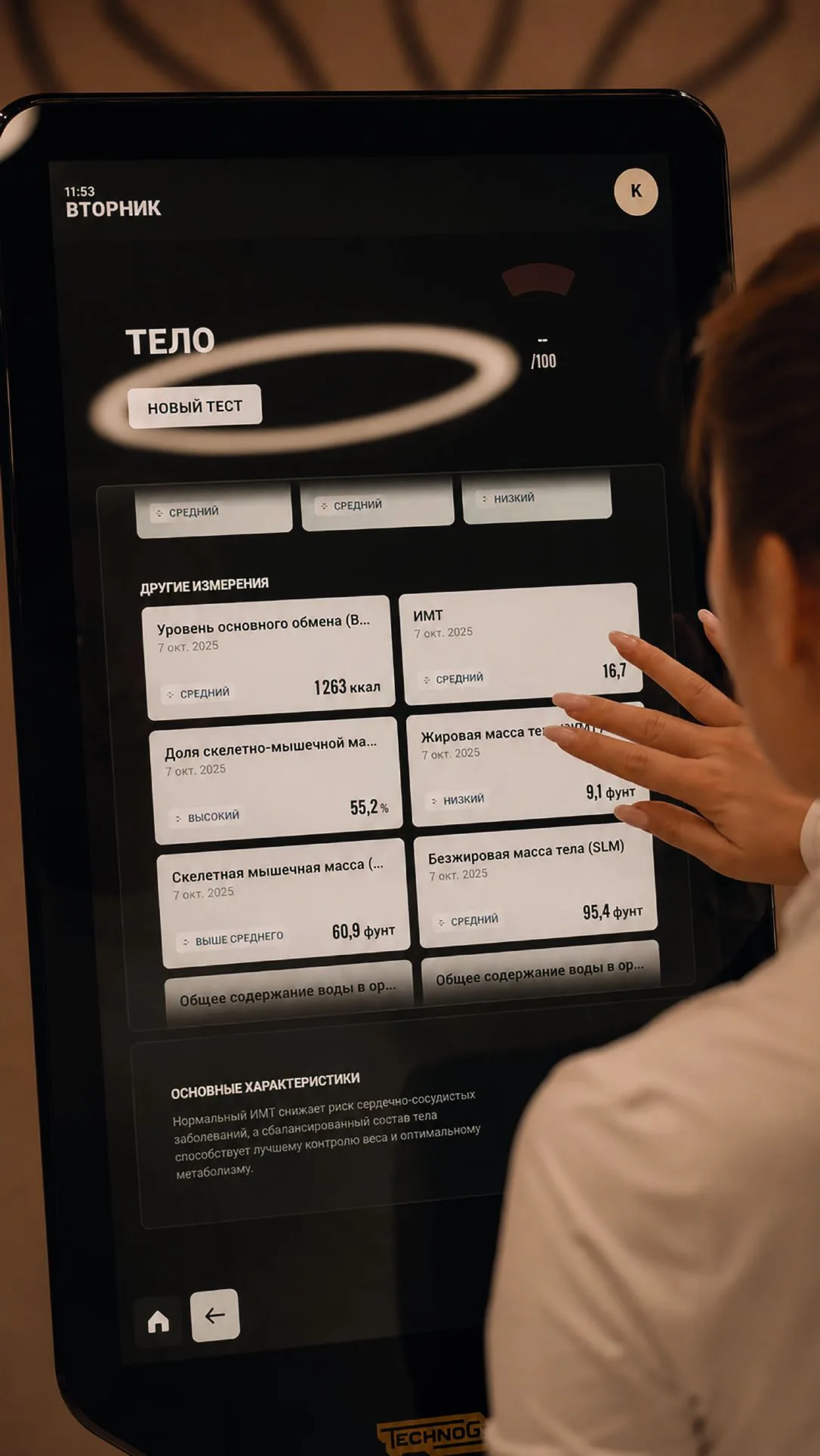
If you are not sure where to begin, take the digital body analysis Technogym Check Up: it shows posture and joint mobility, and it is easier to build a combination of formats on that basis.
Pilates Reformer at Impress Fitness
At Impress Fitness, reformer classes run in mini-groups. They are led by Pilates Mat and Pilates Reformer trainers.
- Natalya Linyova is a certified Pilates Reformer specialist (Balanced Body) with 10 years in fitness; her areas include postnatal recovery.
- Sogdiana Abduhalikova is a master of sport in rhythmic gymnastics and leads classes at a comfortable pace.
- Kamila Alish works on posture, core and joint mobility, and helps reduce discomfort in the back.
You will find all the club’s formats on the Impress Fitness page. For help choosing a club, see Women’s fitness in Tashkent: how to choose a club.
Questions and answers
Do I need special preparation to start?
No. The reformer suits people who have never trained, because the load is set for you. What matters is telling your trainer about your health and goals.
Can I use the reformer after childbirth?
Such classes are available at Impress Fitness. A doctor determines when you can return to exercise, so consult them first and then discuss a plan with your trainer.
How is the reformer different from a gym?
It follows a different logic: the emphasis is on precision, control and the work of deep muscles rather than on working weights. The gym and the reformer do not compete; they are easy to combine.
How do I book and find the timetable?
The timetable, class format and booking are on Instagram: @impressfitnessuz. The club is in Tashkent at Buyuk Ipak Yo’li St., 288; you can also simply come in and find out everything on the spot.
Be Impressive.